



Part 01 of 04 · Walls
A city inside rings
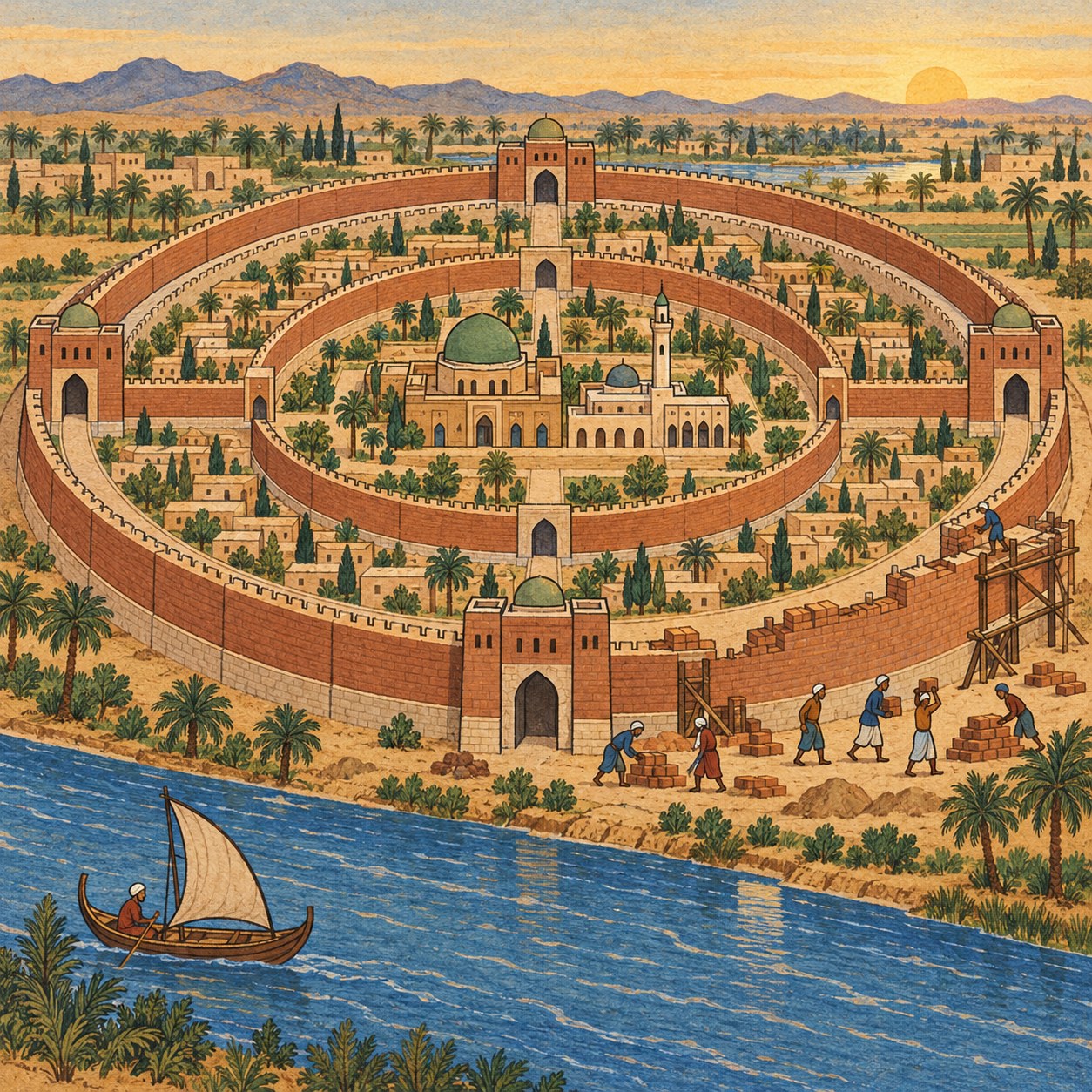
Written accounts describe a moat and more than one wall around the circle, the main wall the thickest of all. Together they drew a hard line between the caliph’s city and the world outside.
Next · Gates
Heart of
the Golden Age
The journey
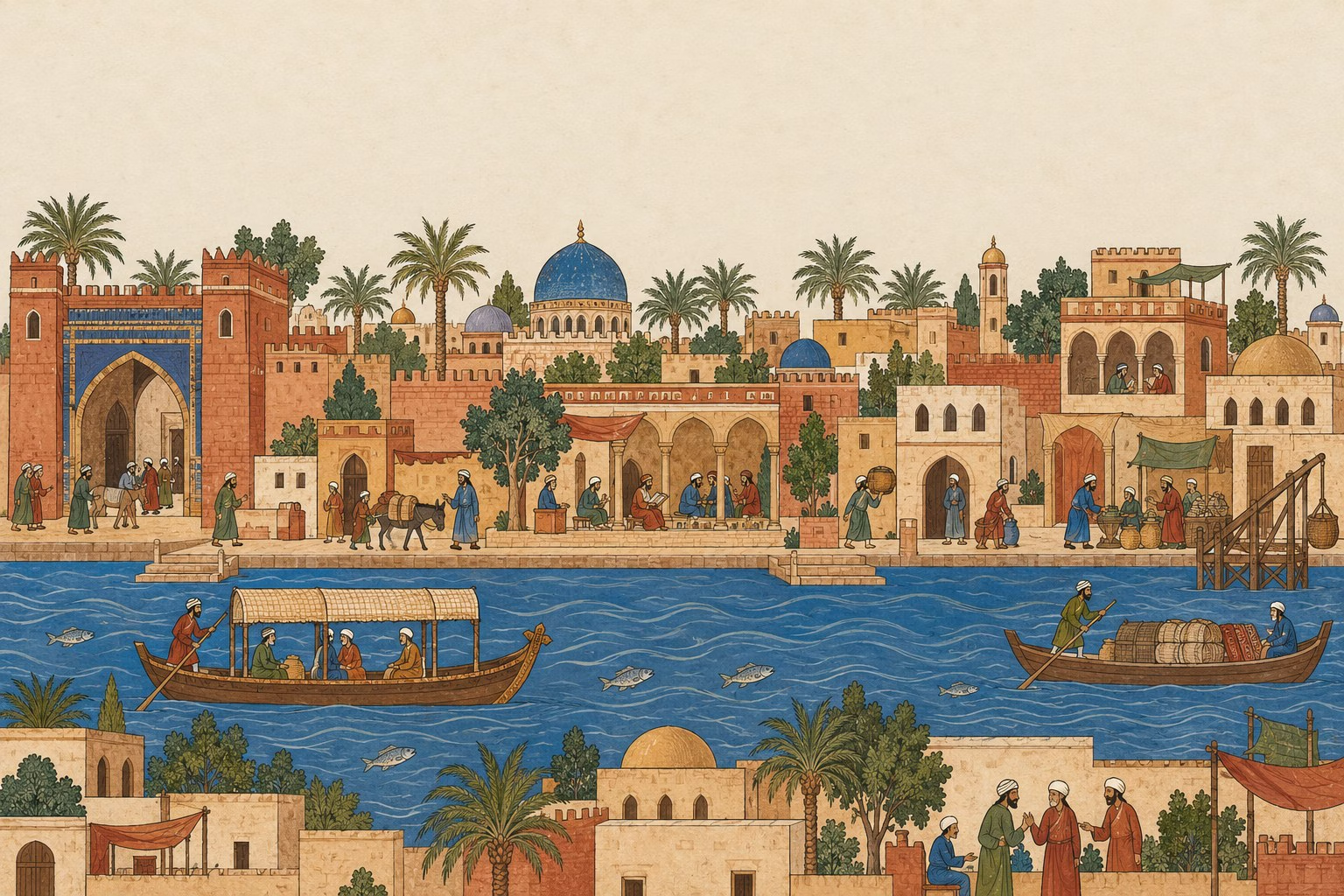
Follow the city from its founding on the Tigris to the hospitals, libraries, and scholars that made it one of the great centres of knowledge in history.
The story
I · 762–833
A capital rises on the Tigris and begins gathering knowledge
II · 833–945
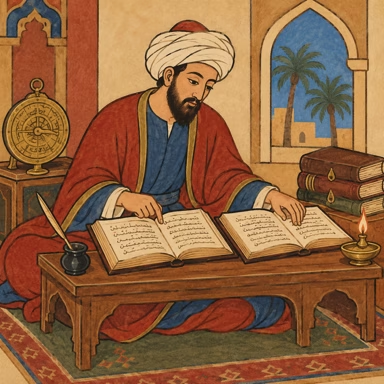
Scholars translate, test, and invent as power shifts.
III · 945–1258
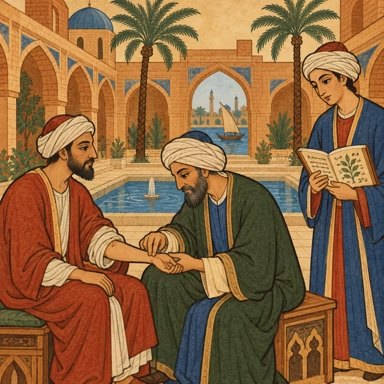
Learning becomes institutions, and books travel far beyond the city.
Hover an image to enter its age
In seventy years, a new capital rose on the Tigris, drew people from across an empire, and began gathering knowledge from many languages.
01 · 750
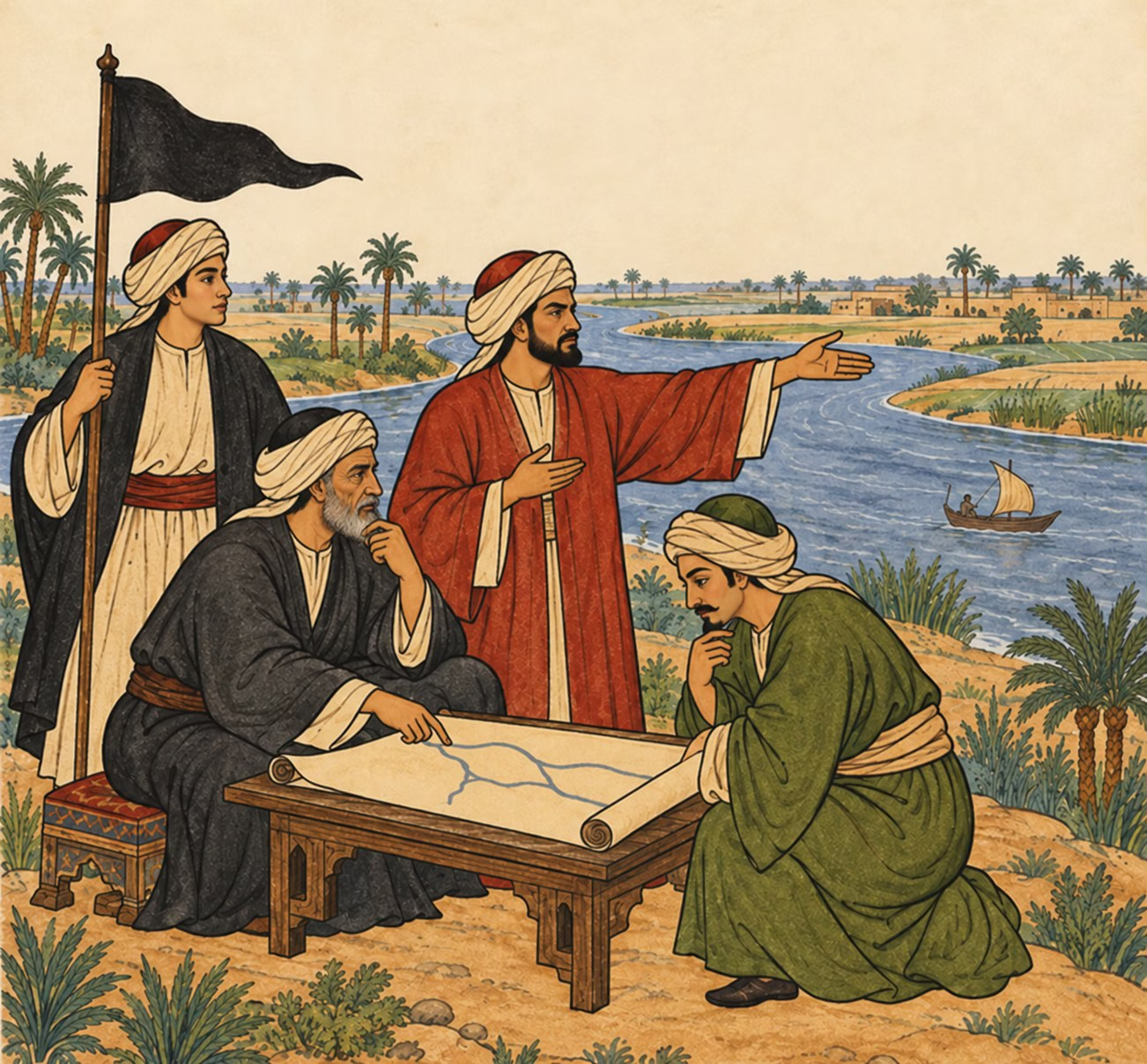
In 750, the Abbasids overthrew the Umayyad dynasty and took control of a vast caliphate. Power was shifting east, and the new rulers wanted a capital that reflected it. They looked to Iraq, a land of old cities, near the former Sasanian capital of Ctesiphon. The question was where, exactly, to build.
02 · 762
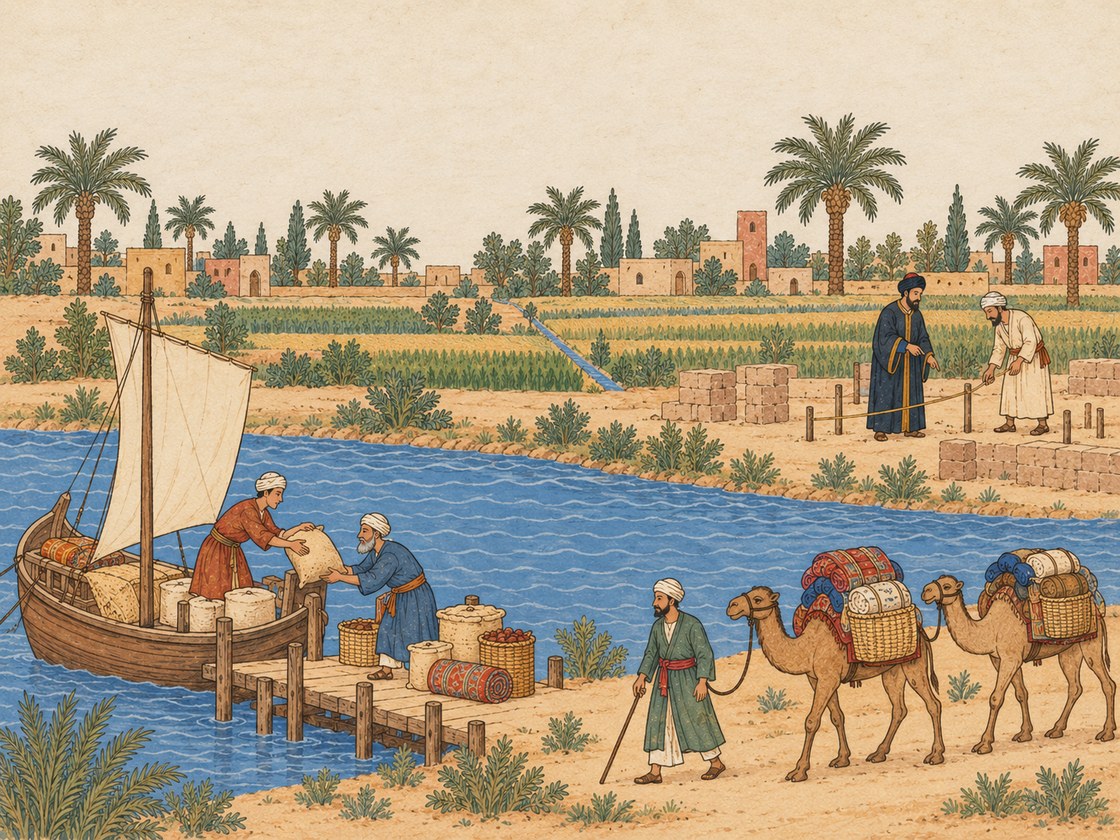
The answer lay on the Tigris. The river and the roads around it linked the site to farmland and to trade networks reaching far beyond Iraq: a steady flow of people, supplies, and ideas. In 762, the caliph al-Mansur began to build. Geography offered the opportunity; imperial ambition would turn it into a city.
762
CE · 145 AH
The year al-Mansur founded Baghdad—the starting point of its Golden Age, in a region settled long before.
CE = Common Era · AH = Hijri year (Anno Hegirae)
Part 01 of 04 · Walls
Written accounts describe a moat and more than one wall around the circle, the main wall the thickest of all. Together they drew a hard line between the caliph’s city and the world outside.
Next · Gates
Part 02 of 04 · Gates
Four gates opened on the diagonals, each toward a different part of the empire. From each one an arcaded avenue ran through the ring of houses to the open centre.
Next · Mosque
Part 03 of 04 · Mosque
The congregational mosque stood beside the palace at the centre, where the community gathered for Friday prayer.
Next · Palace
Part 04 of 04 · Palace
At the very centre stood the caliph’s palace under a great dome. Every ring and every road of the plan led here: a city drawn around its ruler.
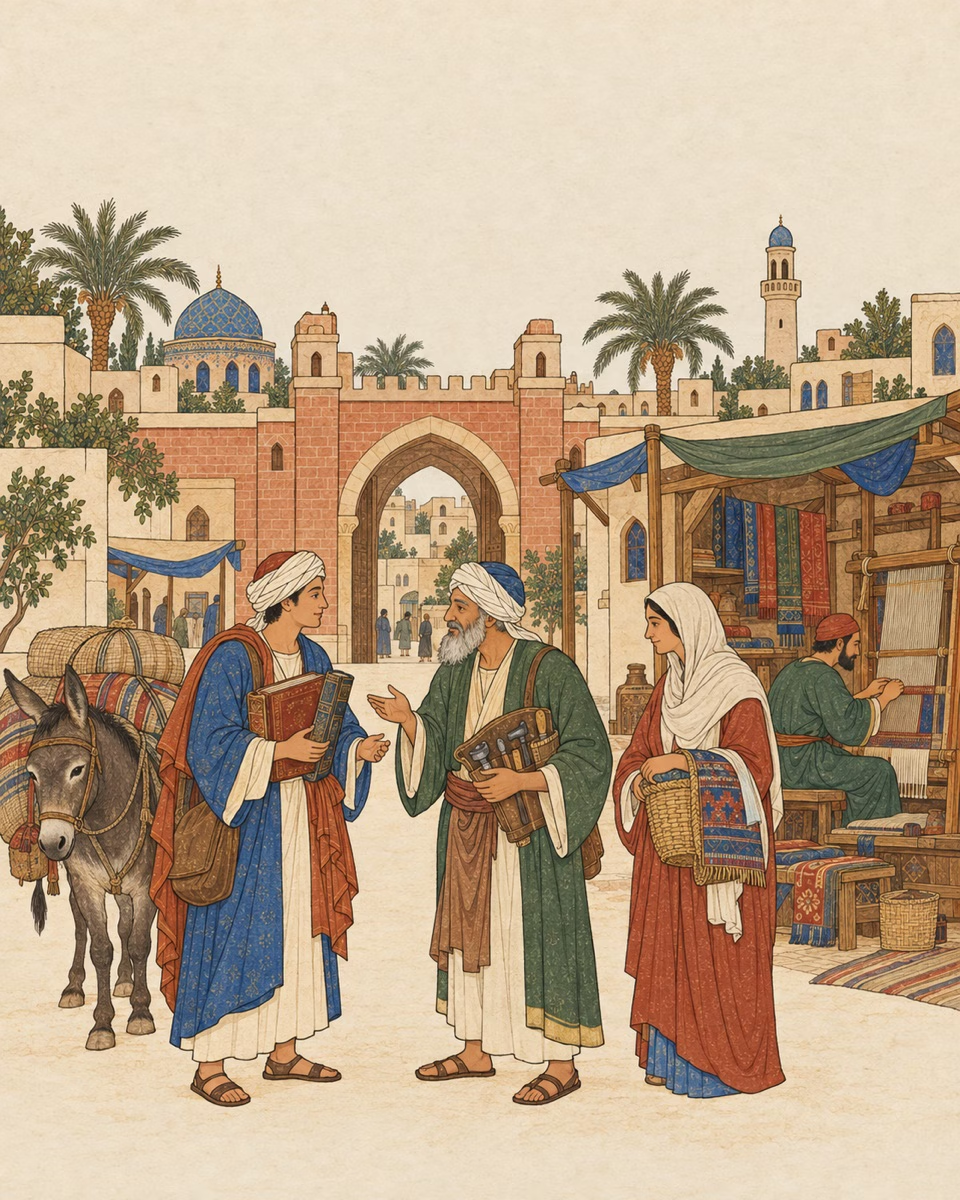
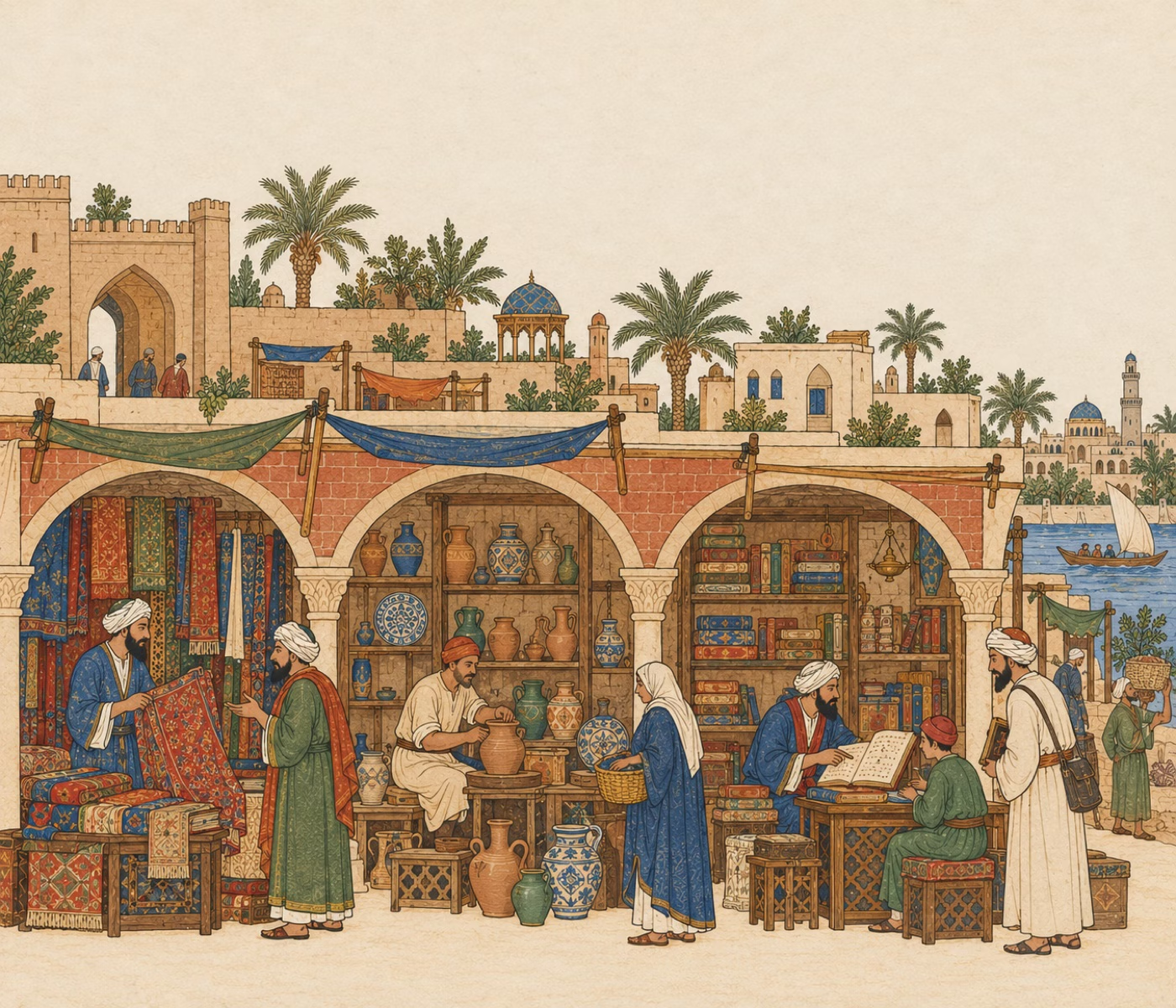
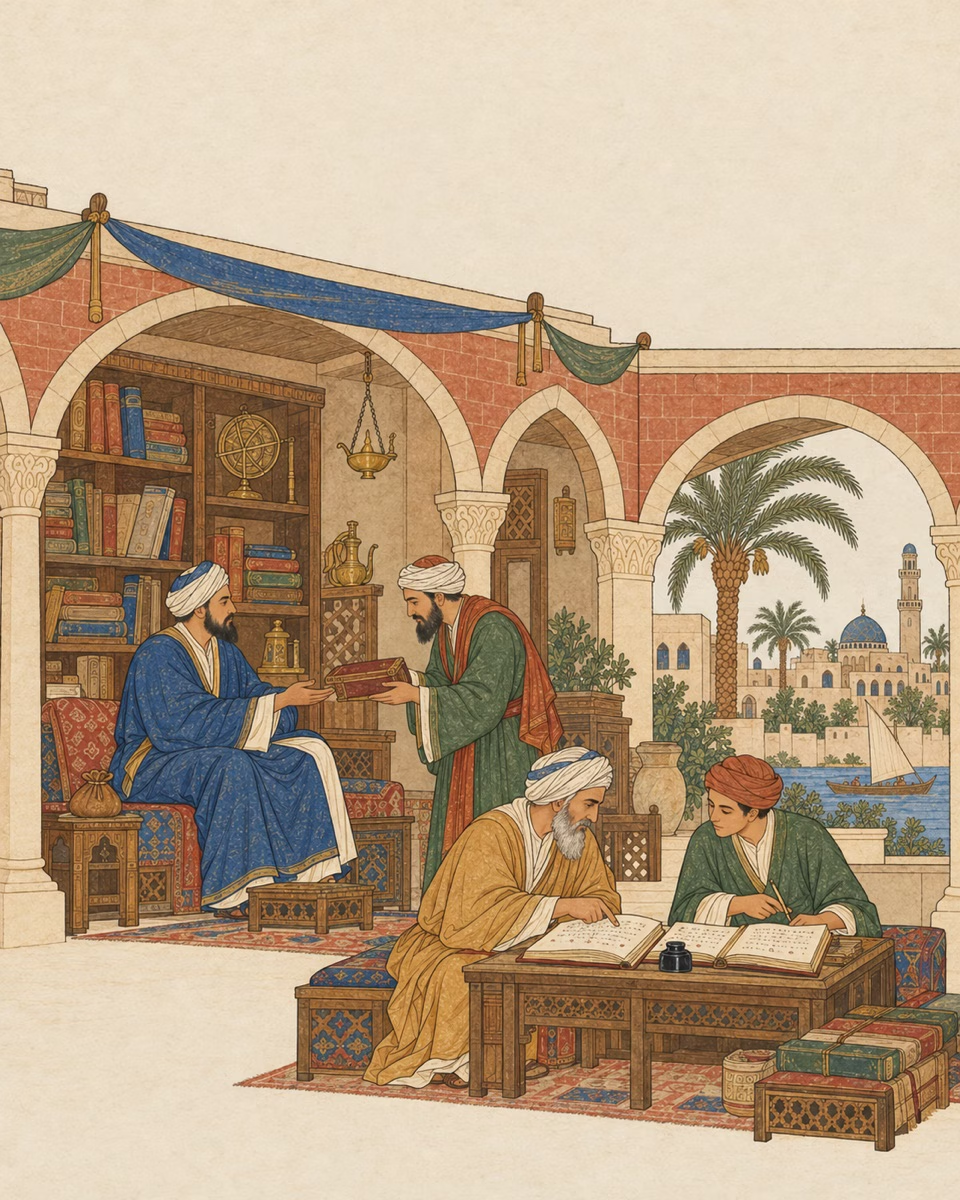
The circle could not hold for long. Markets, workshops, and neighbourhoods spread beyond the original enclosure as people arrived from across the empire, drawn by work at court and by trade. Baghdad became an Arabic-speaking metropolis with a strong Persian presence, and with the people came their skills and their knowledge. Skills and ideas needed patrons, and Baghdad had them.
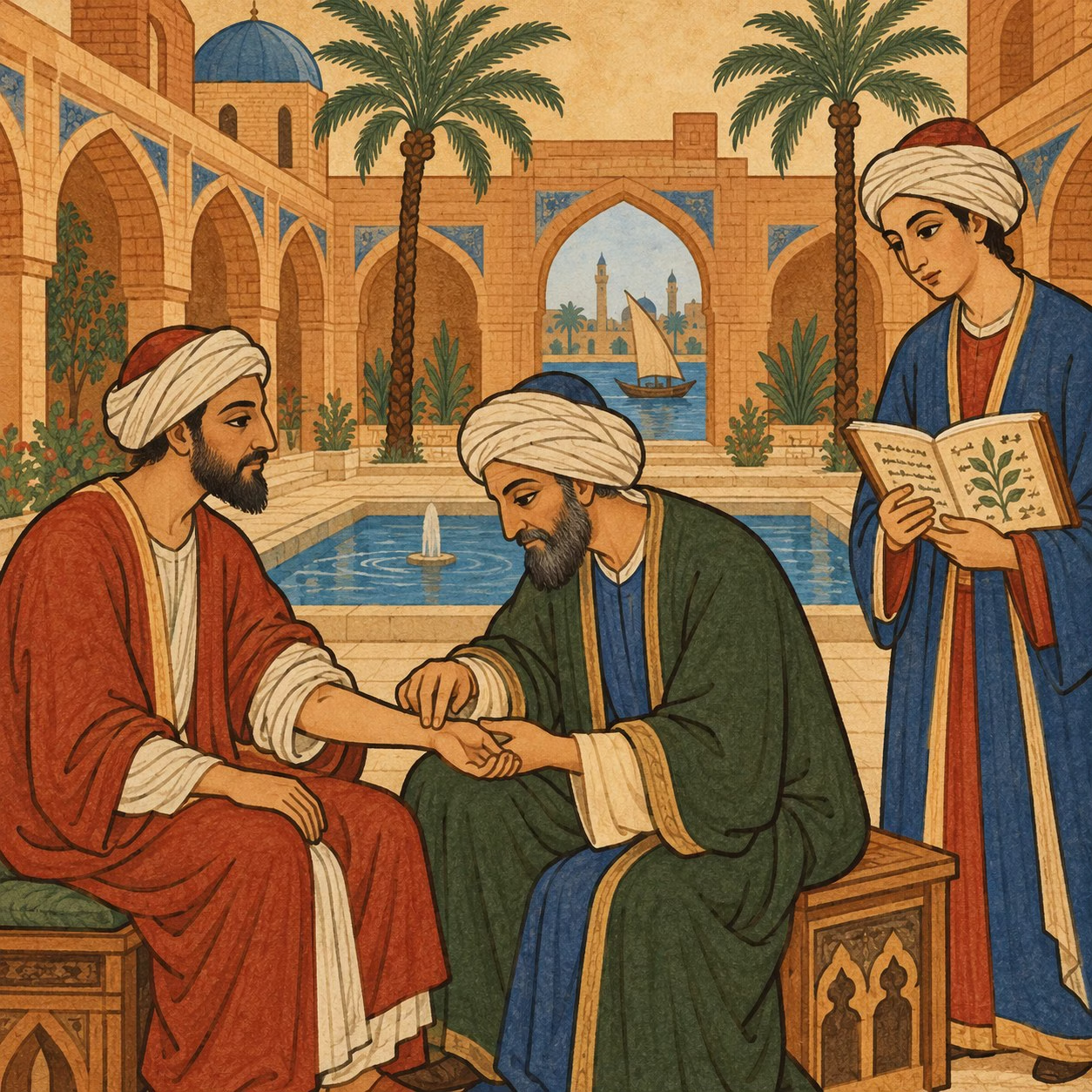
Under Harun al-Rashid, who ruled from 786 to 809, the court commanded immense wealth; under al-Ma’mun, from 813 to 833, translation and scholarship won prominent support. A court needed physicians and experts in calculation, and a patron surrounded by scholars gained prestige. Officials and wealthy families followed, and many of them paid for one demanding task: translation.
Patronage paid for the work. What made it last were three things: careful translation, places to keep the books, and scholars who turned what they read into new methods.
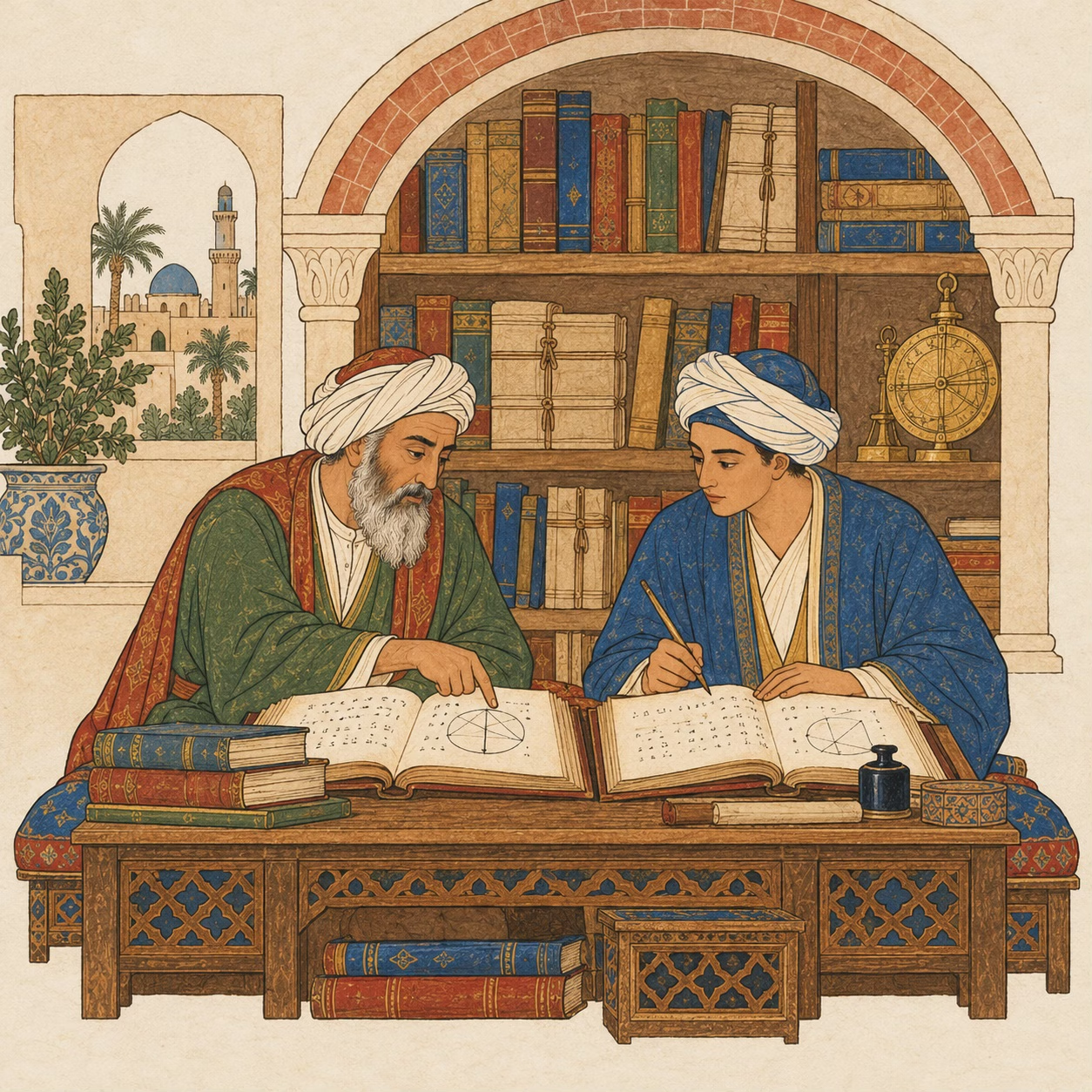
Greek, Syriac, Persian, and Sanskrit learning began to flow into Arabic. A translator had to know the subject as well as the languages, and a damaged manuscript, an unfamiliar term, or a conflicting diagram could become a puzzle in its own right. Solving those puzzles turned translators into scholars.
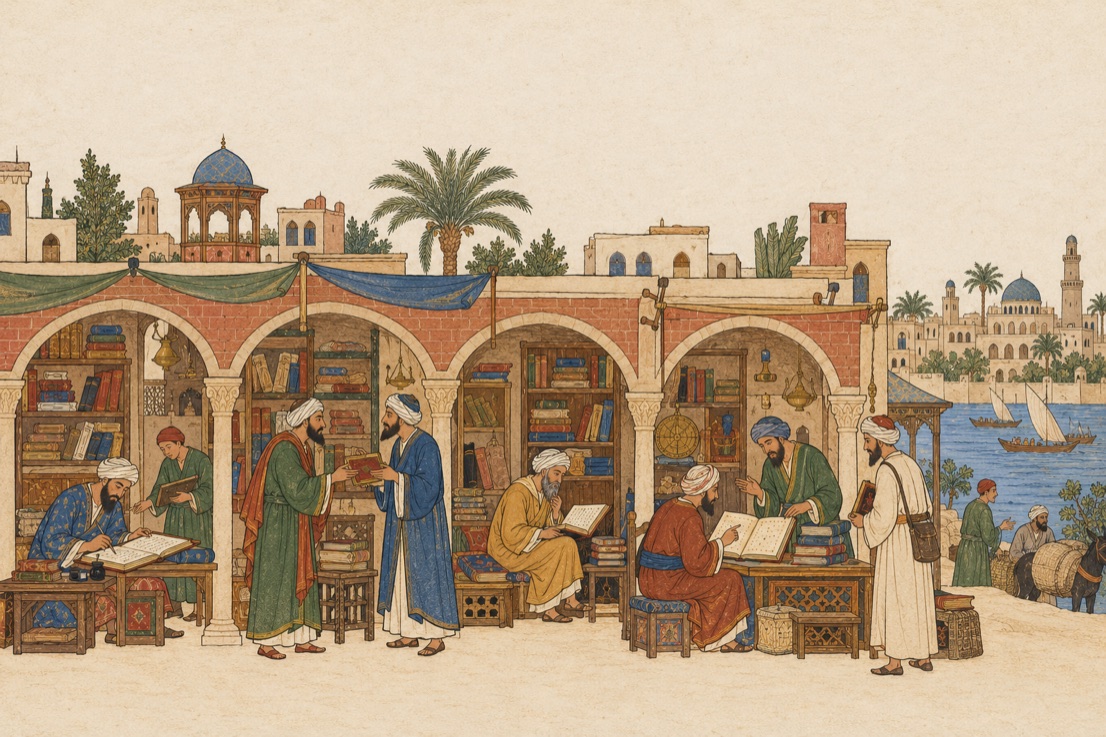
Books gathered in palaces, private houses, and institutions, among them the caliphal collection known as Bayt al-Hikma, the House of Wisdom. Historians still debate how it was organised; it was not a modern university. But it became a symbol of a growing culture of collectors, copyists, and readers.
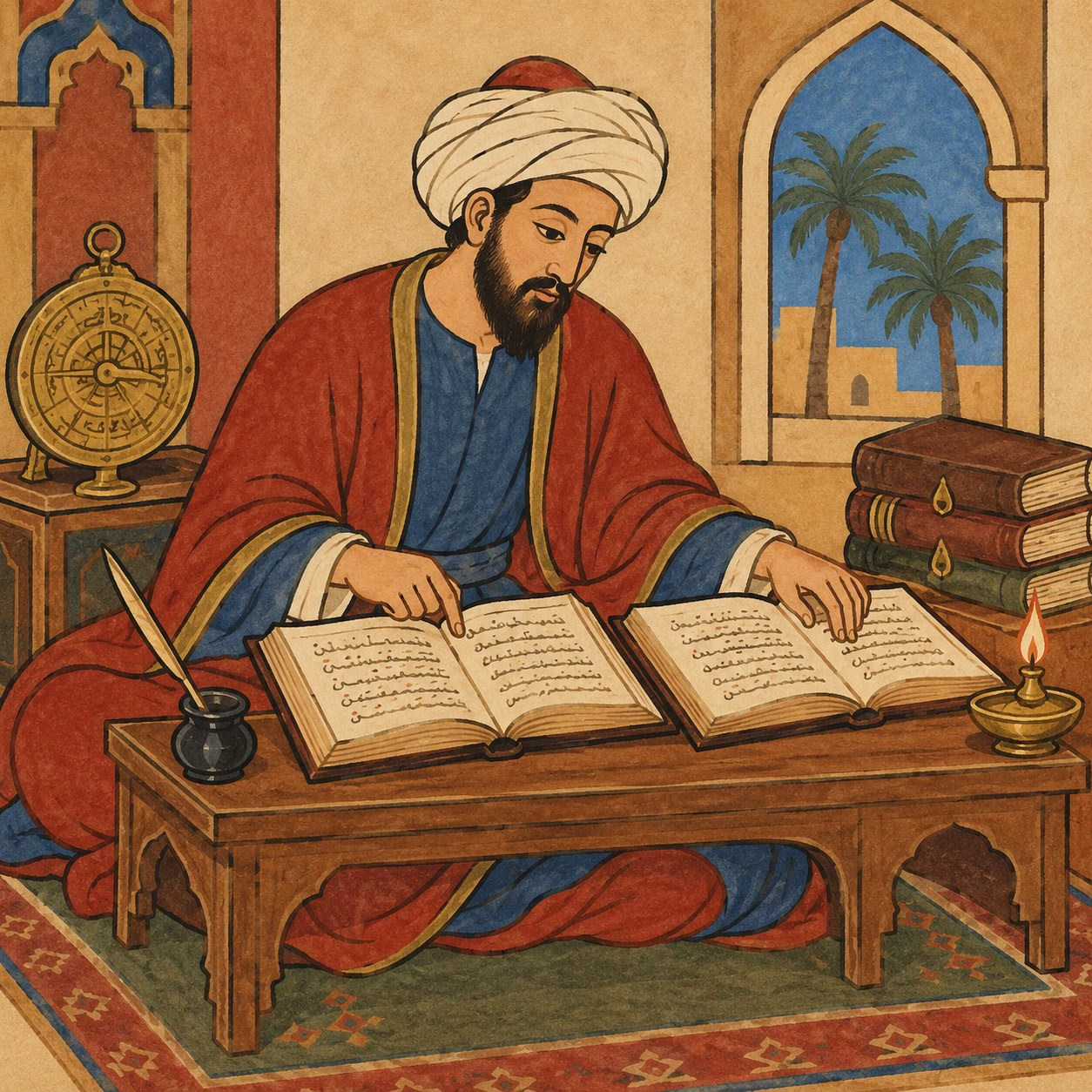
In this world worked al-Khwarizmi. Writing in the early ninth century on algebra, arithmetic, astronomy, and geography, he set out systematic methods for solving equations in his Book of Algebra. “Algebra” comes from its key term, al-jabr; “algorithm” from a Latin form of his name. Two everyday words still carry his legacy.

End of Period I · 762–833
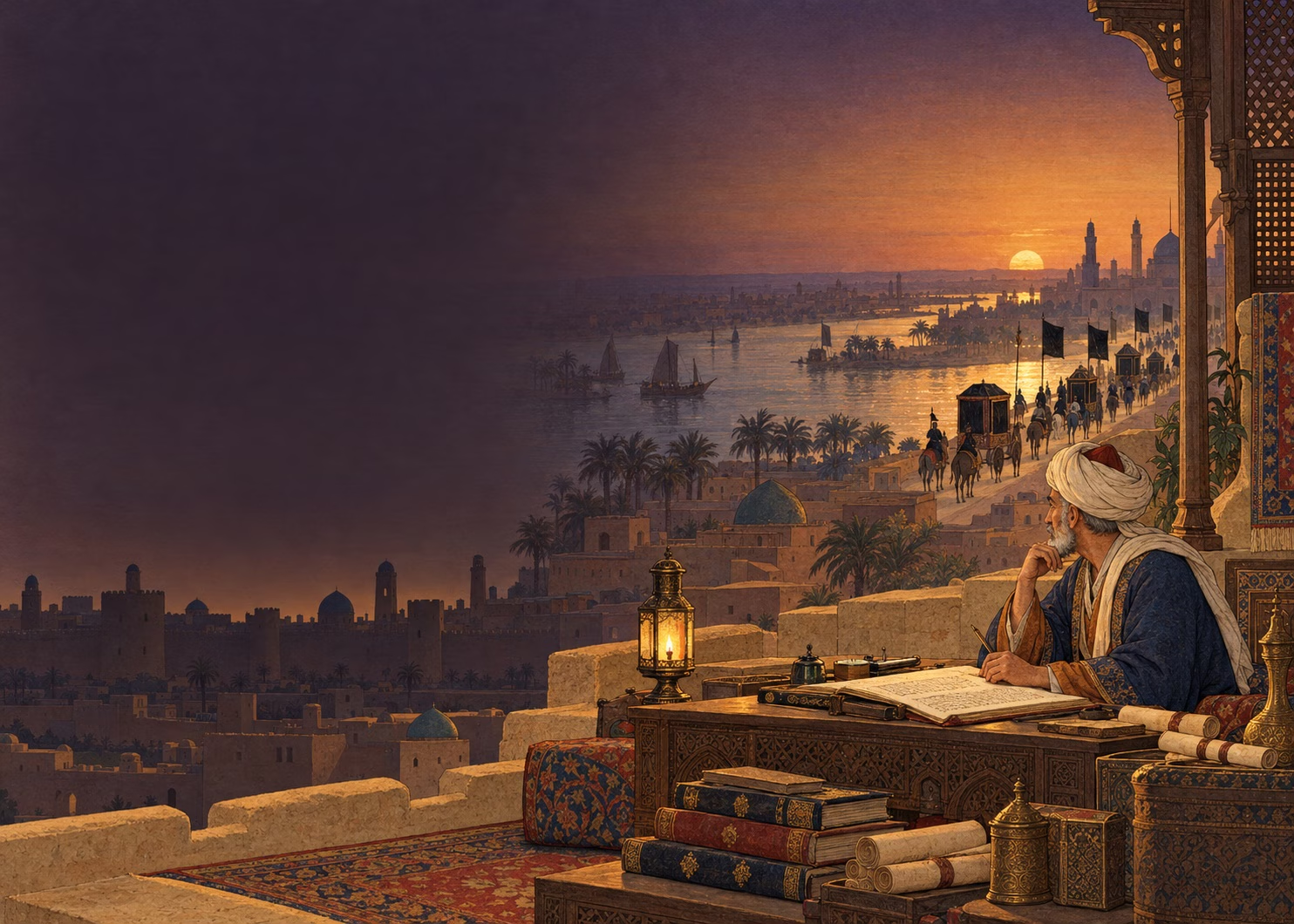
In 833 al-Ma’mun died on campaign. Within three years the court had moved north to Samarra, and Baghdad would be without its caliphs for more than half a century. But what the city had gathered did not leave with them: the translators, the libraries, the new methods. In the century ahead they would be tested, argued over, and built upon.